Water treatment sounds simple until you actually start looking at what a glass of tap water may contain. There can be sediment, minerals, chlorine, dissolved compounds, and other substances that aren’t visible to the eye. Then there are the practical concerns: water taste, appliance protection, filter life, and how much maintenance a system requires.
That’s where multi-stage filtration becomes interesting. Rather than asking one filter to handle every problem, a well-designed system gives different components different jobs. One stage protects the next. Another targets dissolved substances. A final stage can improve the water before it reaches the faucet.
It’s a little like preparing a meal. You wouldn’t expect one kitchen tool to chop, cook, strain, and serve everything perfectly. Water treatment can work in much the same way.
Start by Protecting the System
Before water reaches a sensitive filtration component, it often helps to remove larger particles first.
Dust, sand, rust particles, and other suspended material can enter a home’s water supply for various reasons. Private wells may carry naturally occurring sediment, while aging plumbing can contribute particles over time. Even municipal systems can experience temporary disturbances.
A properly selected pre-filtration stage can capture some of this material before it reaches finer filters or other treatment components. This protects downstream equipment and can help extend the useful life of more specialized filters.
The type of pre-filter matters, though. A coarse sediment filter may be suitable for visible particles, while a finer cartridge may be necessary for smaller suspended material. Choosing the wrong filter can lead to frequent clogging or inadequate protection.
In other words, the first stage should be selected based on what is actually coming into the home.
Filtration Is About More Than One Type of Contaminant
One reason water treatment can seem confusing is that “filtration” is often used as an umbrella term.
Different technologies work in different ways. Sediment filters physically trap particles. Activated carbon can adsorb certain chemicals and improve taste and odor. Ion exchange can address specific dissolved ions. Membranes can separate substances based on size and other characteristics.
The treatment method should therefore match the water-quality concern.
If you’re dealing with sediment, a membrane isn’t necessarily the first thing you need. If the concern involves dissolved substances, a basic particle filter may have very little effect.
Testing helps make this distinction clearer.
The Membrane Does the Heavy Lifting in Some Systems
In reverse osmosis systems, the membrane is the component that receives much of the attention.
Water is pushed through a semipermeable barrier under pressure. The membrane allows water molecules to pass while reducing many dissolved substances. It’s an effective technology for certain water-treatment goals, but it works best when the rest of the system supports it.
This is where membrane filtration becomes more than simply installing a membrane and hoping for the best.
Membranes can be sensitive to sediment, chlorine, scaling, and other conditions depending on their construction and application. If incoming water isn’t properly conditioned, membrane performance and lifespan may suffer.
A good multi-stage system is designed as a team. Earlier components prepare the water so the membrane can do its job more effectively.
Carbon Filtration Has a Useful Supporting Role
Activated carbon is widely used in household water treatment, particularly for improving taste and odor.
It can also reduce certain chemicals depending on the carbon type, contact time, flow rate, and other system conditions. Carbon is often used before a membrane or as a final treatment stage.
One reason it’s so popular is that taste matters. Even when water meets applicable quality standards, a strong chlorine taste can make people reluctant to drink it.
For households trying to drink more water, making the water taste better can have a surprisingly practical benefit. People are more likely to refill the bottle sitting on their desk when the water actually tastes good.
Why the Final Stage Matters
After water has passed through the primary treatment stages, some systems use an additional filter before delivery.
This final component can serve several purposes. It may improve taste, capture residual particles, or provide a final polishing step depending on the design.
The concept of post-filtration is particularly common in drinking-water systems where the treated water passes through a final carbon filter before reaching the dedicated faucet.
That last step may seem unnecessary at first glance. But water can pick up taste from storage tanks, tubing, or other components, and a polishing filter can help produce a more pleasant final product.
Again, the exact role depends on the system. Not every installation needs every possible stage.
More Stages Don’t Automatically Mean Better Water
There’s a common assumption in water treatment: if three filters are good, six must be better.
Not necessarily.
Adding unnecessary stages increases installation costs, takes up space, and creates more components that eventually require maintenance. A system should have enough treatment capacity to address the identified water-quality issues—not simply as many cartridges as possible.
For example, if your only concern is chlorine taste, a well-designed carbon filter may be all you need. Adding reverse osmosis, multiple specialty cartridges, and additional equipment could create complexity without meaningful benefit.
Good engineering is often about knowing what not to add.
Water Testing Should Guide the Design
A filtration system should begin with information.
A water analysis can help identify hardness, sediment, pH, iron, manganese, chlorine, total dissolved solids, and other characteristics. More specialized testing may be needed for specific contaminants.
The results can then guide the selection of filtration media and treatment stages.
This approach also makes it easier to evaluate product claims. Instead of asking, “Does this system remove everything?” you can ask a much more useful question: “Does this system reduce the substances I actually need to address?”
That shift can save homeowners considerable money.
Maintenance Is Part of the System
Every filtration stage has a job, and every filter has a service life.
Sediment cartridges eventually become loaded. Carbon media lose effectiveness. Membranes need replacement. Post-treatment cartridges require attention too.
A system can continue producing water even when its performance is declining, which makes maintenance easy to overlook.
Keep a simple record of filter changes and follow manufacturer recommendations. If the system is treating a specific contaminant, periodic water testing can provide additional confidence that it continues to perform properly.
Maintenance isn’t the glamorous part of water treatment, but it may be the most important part.
Efficiency Deserves a Closer Look
Treatment performance isn’t the only consideration.
Water use, energy consumption, filter replacement frequency, and operating costs all contribute to the long-term value of a system.
Reverse osmosis, for instance, typically produces a concentrate stream during operation. More efficient systems may recover a greater percentage of incoming water, but performance varies.
When comparing equipment, don’t look only at the purchase price. Consider how the system will behave over several years.
The cheapest installation isn’t necessarily the cheapest system to own.
A Balanced System Usually Makes More Sense
The best filtration setup is rarely the one with the most equipment. It’s the one where each component has a clear purpose.
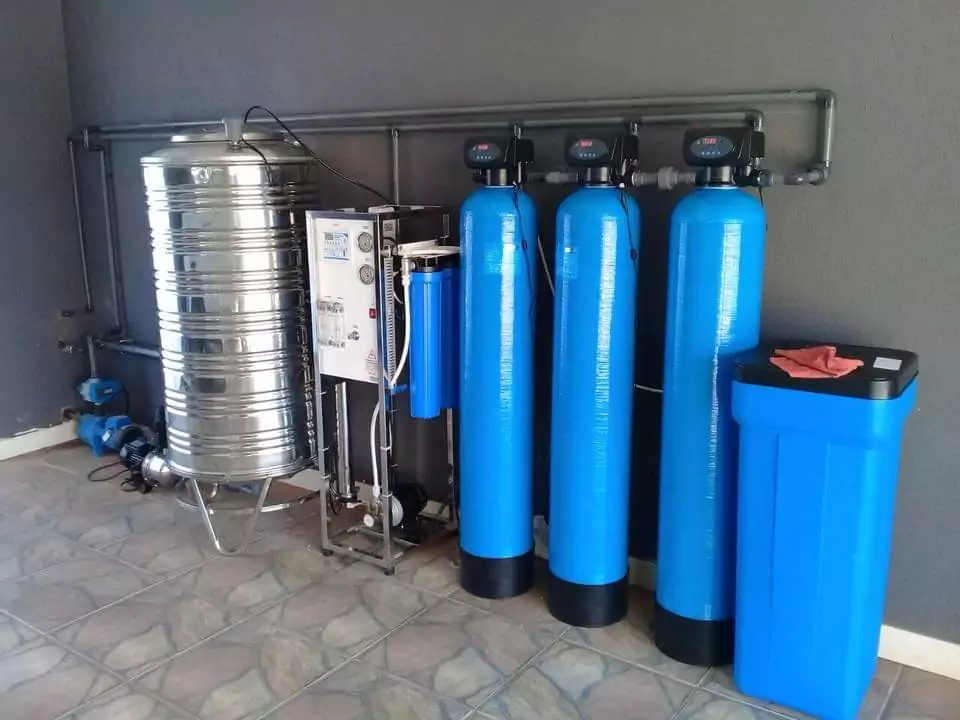
Pre-filtration protects sensitive downstream components. Membrane treatment can address many dissolved substances when appropriate. Carbon can improve taste and odor and provide additional treatment. Post-filtration can polish the final water before it reaches the glass.
When those stages are properly matched to the water, the system works as a coordinated whole.
That’s really the goal—not complicated technology for its own sake, but treatment that makes sense.
Understand the water first. Choose the technology second. Maintain it afterward.
Once you approach water treatment that way, the maze of filters, membranes, cartridges, and treatment options becomes much easier to navigate. And the result isn’t just better water. It’s a system that has a reason for being there, which is usually the smartest investment of all.