Water has a funny way of becoming invisible. We turn on the tap, fill a glass, start the washing machine, take a shower, and rarely stop to consider what’s happening behind the scenes. It’s only when the water starts leaving spots on dishes, tasting unusual, or making the shower feel different that we begin paying attention.
That’s often when the search for a water treatment solution begins.
And it can get confusing quickly. There are softeners, filters, membranes, conditioners and plenty of product descriptions promising cleaner, better, healthier water. Some systems focus on minerals. Others target dissolved substances, sediment, taste or odor.
The trick is not finding the system with the longest list of features. It’s finding the one that fits your water and the way your household actually uses it.
Start With the Water You Have
Before comparing equipment, take a closer look at your water source.
Municipal water and private well water can have very different characteristics. Even within the same community, water quality may vary because of local plumbing, source conditions or changes in the supply.
Hardness is a common concern. You may notice white deposits around faucets, cloudy spots on glassware or scale developing inside fixtures. Other homes may deal with sediment, chlorine taste, iron or unpleasant odors.
These clues are useful, but they don’t tell the whole story.
Testing can provide a more reliable picture of what’s present and help you avoid treating a problem that doesn’t actually exist.
When Hard Water Becomes a Household Problem
Hard water isn’t usually dangerous simply because it’s hard. The frustration tends to come from what it does around the home.
Calcium and magnesium can leave mineral deposits on fixtures and surfaces. Soap may behave differently, dishes can develop spots, and water-heating appliances may collect scale over time.
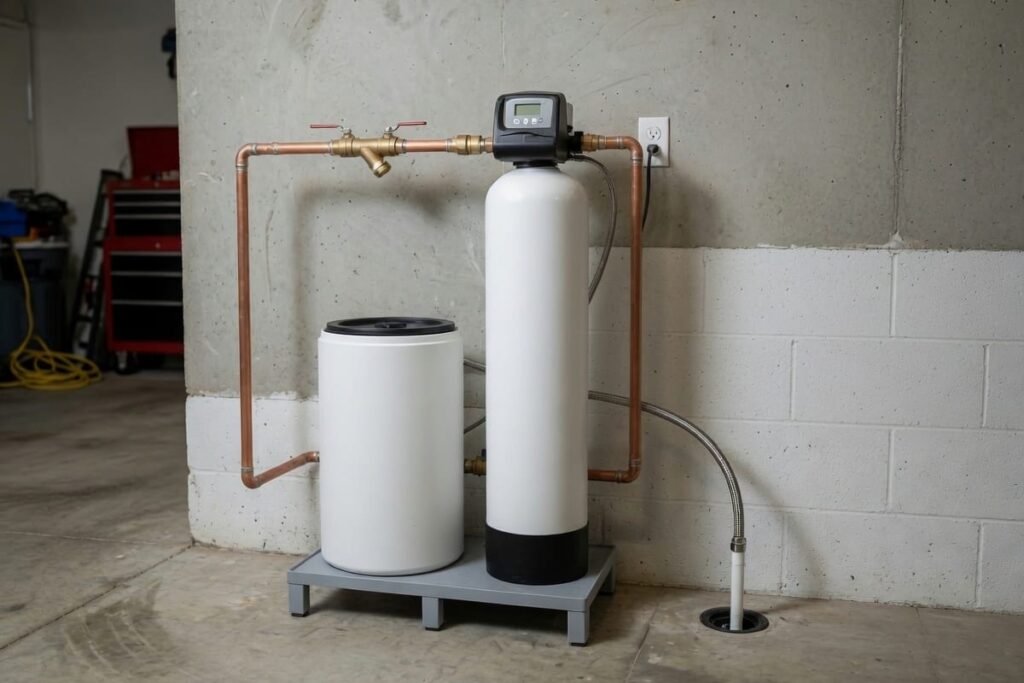
For homes with significant hardness, water softener systems can be worth considering. Traditional softeners typically use ion exchange to reduce calcium and magnesium in the water, helping address the effects associated with hardness.
The important word here is “significant.” Not every home needs a softener, and some households may prefer another approach.
A water test can help determine whether the investment makes sense.
Drinking Water Can Have Different Priorities
Household water and drinking water don’t always need exactly the same treatment.
You might be perfectly comfortable using treated municipal water for showers and laundry while wanting additional treatment for the kitchen faucet. That’s where point-of-use filtration can become attractive.
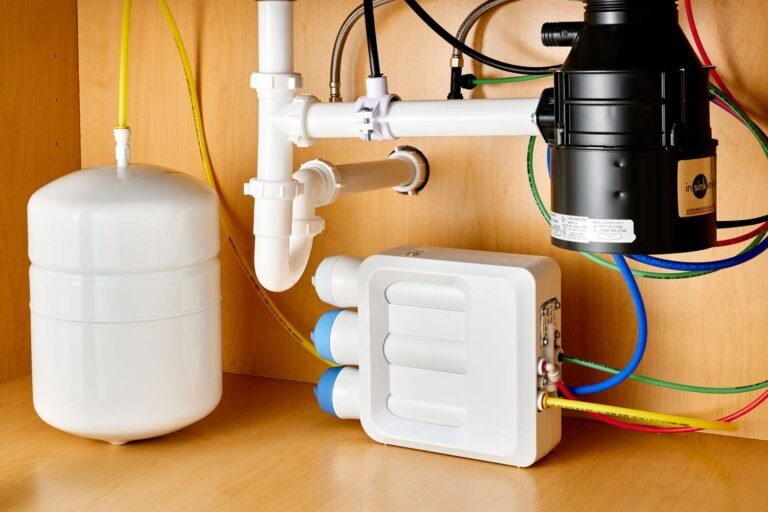
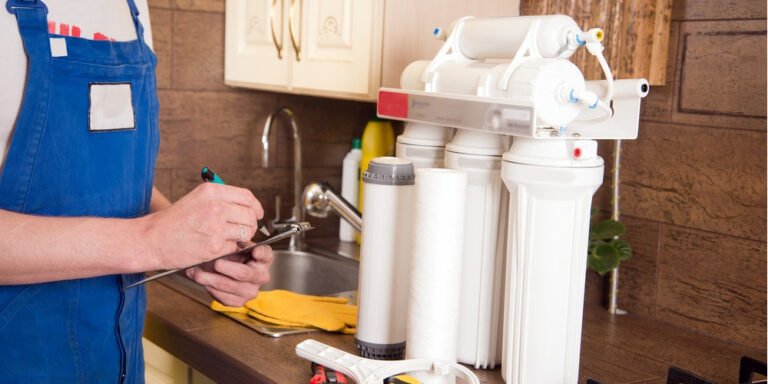
Some homeowners choose reverse osmosis systems for drinking and cooking water because reverse osmosis uses a semipermeable membrane and can reduce many dissolved substances, depending on the system and feed-water conditions.
These systems aren’t magic boxes, though. Performance depends on proper installation, filter condition, water pressure and membrane maintenance.
If you’re comparing one, look beyond the product name. Ask what contaminants it is certified or designed to reduce, how often filters need replacement, how much water it produces, and what happens to the reject water.
Those details matter once the system is living in your kitchen.
Not Every Home Wants Salt
Traditional softeners have been around for a long time, but they’re not the only option homeowners encounter.
Some people specifically look for salt-free systems because they prefer an approach that doesn’t use salt for the treatment process. Depending on the technology, these systems may condition water or reduce scale formation rather than removing hardness minerals in the same way an ion-exchange softener does.
That distinction is important.
If your goal is to actually reduce hardness minerals, a salt-free conditioner may not provide the same result as a conventional softener. If your main concern is scale control and you prefer to avoid salt, however, conditioning technology may be worth investigating.
The right choice depends on what “better water” means for your household.
Think About the Whole Plumbing System
It’s easy to concentrate on drinking water and forget about everything else.
Your water heater, dishwasher, washing machine, showers and faucets all interact with the same water supply. If hardness or sediment is affecting several parts of the home, treating only one faucet may leave much of the problem untouched.
Whole-home treatment can make sense when the concern affects water throughout the property.
On the other hand, if the issue is limited to taste or specific drinking-water concerns, a point-of-use system may be more practical.
There isn’t a rule saying every home needs a whole-house setup. Treatment should follow the problem, not the other way around.
Capacity Matters When Life Gets Busy
A treatment system needs to keep up with real household demand.
Think about a normal weekday morning. Two people shower. Someone flushes a toilet. The dishwasher is running. Another person is filling a bottle and washing a few dishes.
Water usage can climb quickly.
System capacity and flow rate should therefore be considered during selection. An undersized system may struggle during peak demand, while an unnecessarily large unit can add cost without offering a useful advantage.
A professional assessment can help determine the appropriate size based on household occupancy, plumbing and expected water use.
Don’t Forget Installation Space
The perfect system on paper can become a nuisance if it’s installed in an awkward location.
Treatment equipment needs room for connections, controls and future service. Filters need to be reachable. Valves should be accessible. If a system requires a drain connection or electrical supply, those requirements need to be planned before installation.
This sounds obvious until you find yourself trying to replace a filter while squeezed between a wall and a water heater.
Give maintenance some thought before the equipment goes in.
A little extra planning can make years of ownership much easier.
Maintenance Is Part of the Deal
No treatment system can maintain itself indefinitely.
Filters eventually become exhausted. Membranes need replacement. Softener components require inspection and supplies. Connections can wear, and settings may need adjustment.
The maintenance schedule varies by equipment and water quality, but it should be understood before purchase.
Ask what needs to be changed, how often it needs attention, and what replacement parts typically cost. Find out whether routine service can be handled by the homeowner or whether professional maintenance is recommended.
A system that fits your budget but requires maintenance you won’t realistically perform may not be the best choice.
Consider Long-Term Costs
Initial purchase price is only one piece of the puzzle.
Over several years, you’ll also spend money on replacement filters, salt or other supplies, electricity, water usage and occasional service.
For reverse osmosis equipment, for example, replacement cartridges and membranes become part of normal ownership. Softening equipment may involve salt and periodic servicing.
Compare those ongoing expenses alongside the upfront cost.
Sometimes a slightly more expensive system proves more economical because it’s easier to maintain or uses resources more efficiently.
Be Careful With Big Claims
Water treatment advertising can sound impressive.
Words like “pure,” “advanced,” “premium” and “complete” are easy to print on a brochure. What matters more is measurable performance.
Look for specific information about what the equipment is designed to reduce. Certifications can also provide useful guidance for certain treatment claims.
If someone tells you that a particular system will solve every water problem imaginable, be skeptical.
Good water treatment is usually more specific than that.
Choose for Your Home, Not Someone Else’s
Your neighbor’s system might be excellent. That doesn’t mean it’s right for you.
Start with your water source and test results. Think about the issues you actually experience. Decide whether your priority is hardness control, drinking water, sediment, taste, odor, scale or some combination of concerns.
Then compare treatment methods based on what they can realistically accomplish.
The best system isn’t necessarily the most expensive or technologically complicated. It’s the one that addresses the real problem, fits the home’s demand, and remains practical to maintain.
After all, water treatment should make life easier, not create another project that never quite ends.
When you choose carefully, the results are pleasantly ordinary. The shower feels better. The dishes look cleaner. The water tastes good. The equipment quietly does its job in the background.
And you get to stop thinking about it — which, for something as important as household water, is a pretty satisfying outcome.