A water filtration system isn’t usually something homeowners spend much time thinking about. Once it’s installed and working, the hope is that it fades into the background. You open the faucet, fill a glass, make coffee, cook dinner, and carry on with the day.
But behind that simple routine, several things determine how well a filtration system actually performs.
The number of treatment stages matters. The type of filtration technology matters. Installation matters. Even small convenience and safety features can make a noticeable difference over the years.
And while manufacturers sometimes make water treatment sound like a high-tech adventure, the underlying idea is fairly straightforward: understand your water, choose appropriate treatment, and make sure the equipment is maintained properly.
More Filtration Stages Don’t Automatically Mean Better Water
When comparing drinking-water systems, homeowners often see products described by the number of stages they contain. A system with several stages can certainly have advantages, but the number itself shouldn’t be the deciding factor.
A properly designed three or four-stage water filtration system may use different stages for different purposes. One filter could reduce sediment, another might target taste and odor, while another treatment stage could address dissolved substances.
That’s useful when the stages complement one another.
But adding another cartridge simply to make the system sound more advanced isn’t necessarily helpful. Every additional component can mean another filter to replace, another connection to inspect, and another expense over time.
The better question is: what does each stage actually do?
Start With a Water Test
Before buying any filtration equipment, learn what’s in the water.
Water quality can vary considerably between homes. Municipal water and private well water have different characteristics, and even two houses using the same general supply can experience differences because of plumbing or local conditions.
A basic water analysis can provide information about hardness, pH, dissolved solids, iron, manganese, and other characteristics. More specific testing may be appropriate when there is a known concern about a particular contaminant.
This information helps prevent a common mistake: treating symptoms without understanding the cause.
If the water has a strange taste, for instance, don’t automatically assume a reverse osmosis system is necessary. Carbon filtration may address some taste and odor issues, while other causes require a different solution.
Understanding the Role of Membranes
Reverse osmosis is one of the most widely recognized technologies in residential drinking-water treatment. Unlike a basic sediment filter, it doesn’t simply catch visible particles.
Instead, the system uses pressure to push water through a membrane with extremely small pathways.
These semi-permeable membranes allow water to pass while reducing many dissolved substances from the treated water. That’s what makes reverse osmosis useful for certain water-quality concerns that conventional filters may not address.
The membrane is only one part of the overall system, however. Pre-filtration can protect it from sediment and other materials, while post-filtration may improve the taste of the treated water.
As with any treatment technology, performance depends on the incoming water, operating pressure, system design, and maintenance.
Installation Is More Important Than It Looks
A high-quality filtration system can still perform poorly if it isn’t installed correctly.
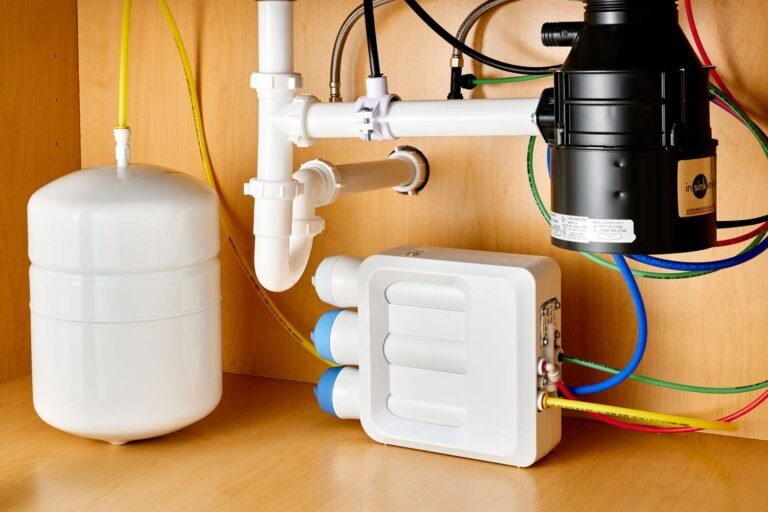
Water pressure needs to be suitable. Tubing and connections should be secure. Drain lines must be properly configured where required. Storage tanks need enough space, and filter housings should remain accessible for future maintenance.
This last point gets overlooked surprisingly often.
An under-sink system might look neat when it’s first installed, but if the filter housings are buried behind pipes and cleaning supplies, changing cartridges becomes a chore.
Good installation should account for the future, not just the first day.
A Little Protection Can Prevent a Big Mess
Water systems involve plumbing, which means leaks are always a possibility—even when the equipment is installed properly.
A small leak beneath a kitchen sink can damage cabinets, flooring, or stored household items before anyone notices.
An automatic shut-off feature can provide an additional layer of protection by stopping water flow when the system detects certain abnormal conditions, depending on its design.
It’s not a replacement for inspection or professional installation. Think of it more as another safety net.
You hope you never need it, but if a problem occurs while nobody is home, that extra protection can be valuable.
Pay Attention to Water Pressure
Pressure affects how water treatment equipment operates.
Some filtration systems can work across a relatively broad pressure range, while membrane-based systems may have more specific requirements. If pressure is too low, treated-water production can slow. If pressure is too high, certain components may experience unnecessary stress.
Before installing a system, it’s worth checking household water pressure and comparing it with the equipment’s specifications.
This is especially important when several people use water at the same time.
A treatment system that performs perfectly when one faucet is running may behave differently during the morning rush, when the shower is going, the dishwasher is filling, and someone is making coffee.
Think About Flow Rate and Household Demand
Water treatment systems are not all designed for the same level of demand.
A small point-of-use drinking system has very different requirements from a whole-house filtration setup.
Consider how many people live in the home and when water demand tends to peak. A large family may use significantly more water each day than a couple or individual.
Flow rate becomes particularly important for whole-house systems. The treatment equipment needs to deliver adequate water without creating an unnecessary restriction in the plumbing.
Sizing the system correctly from the beginning can prevent many headaches later.
Filters Need Regular Attention
It’s easy to forget about filter replacement because the system usually operates quietly in the background.
But filtration media doesn’t last indefinitely.
As filters collect sediment or adsorb substances, their effectiveness can eventually decrease. Replacement intervals vary based on filter type, water quality, and household usage.
Don’t rely entirely on taste or water pressure as a warning sign. By the time you notice a significant change, the filter may already be overdue.
Keep track of installation dates and follow the manufacturer’s maintenance recommendations. It’s a small habit that protects both water quality and equipment performance.
Consider the Cost Beyond Installation
A filtration system’s purchase price is only the beginning.
Think about replacement cartridges, membranes, service visits, electricity where applicable, and other consumables. A system that appears inexpensive initially may become costly if replacement components are expensive or difficult to obtain.
On the other hand, paying more for useful features can sometimes make sense.
The key is to consider the total cost of ownership rather than focusing only on the number attached to the initial purchase.
Technology Should Make Life Easier
Modern filtration systems can include electronic monitoring, leak protection, multiple treatment stages, and improved membrane technology. These features can be genuinely useful when they address real household needs.
But don’t let technology become the reason you buy something.
Start with water testing. Identify the problem. Choose treatment designed for that problem, then look at convenience and safety features that make ownership easier.
That’s a much more sensible approach than shopping by feature count.
Good Water Treatment Should Fade Into the Background
The best filtration system isn’t necessarily the most complicated one. It’s the one that’s correctly matched to the water, properly installed, appropriately sized, and maintained on schedule.
Those details may not sound particularly exciting, but they’re what make a system dependable.
When everything is working as it should, you don’t think about membranes, cartridges, pressure, or shut-off valves. You simply turn on the faucet and use the water.
And really, that’s the whole point.
A well-designed water filtration system should quietly improve everyday life without becoming another household project. Choose carefully at the beginning, take care of it along the way, and it can remain a useful part of your home for years to come.