Introduction
People use these two terms interchangeably all the time, and honestly, I understand why — they’re closely related and often handled by the same person in a small business. But understanding bookkeeping vs accounting properly actually helps you know what you’re paying for, what you should be doing yourself, and when you genuinely need to bring in more specialized help.
The Core Difference in Simple Terms
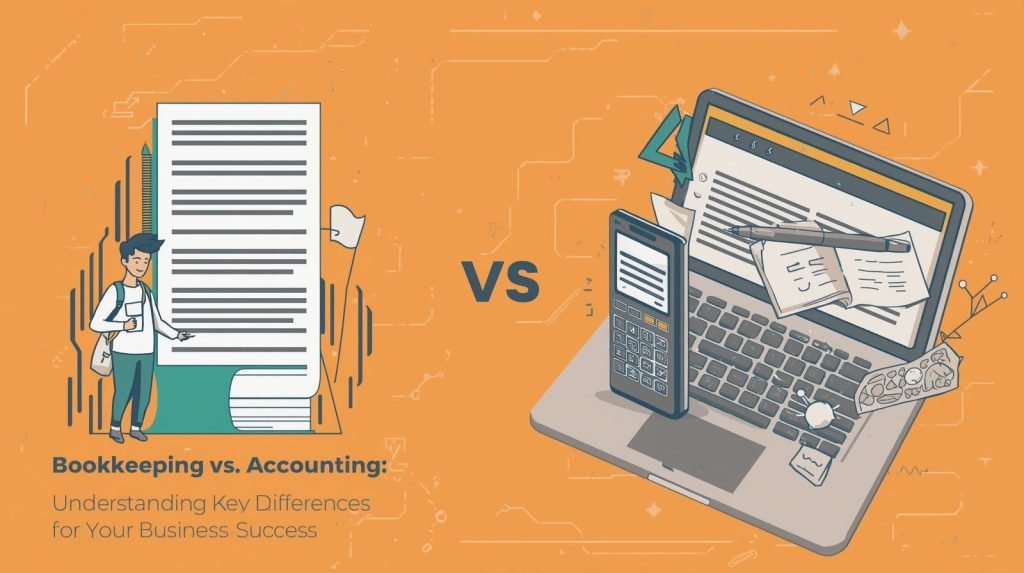
Quick answer: In the bookkeeping vs accounting comparison, bookkeeping is the day-to-day recording of financial transactions, while accounting involves interpreting, analyzing, and summarizing that recorded data to guide business decisions and ensure compliance — bookkeeping feeds the raw data that accounting then makes sense of.
Think of bookkeeping as collecting ingredients, and accounting as actually cooking the meal from those ingredients.
What Bookkeeping Actually Involves
- Recording daily sales and purchase transactions accurately
- Tracking expenses and categorizing them appropriately
- Reconciling bank statements against recorded transactions
- Managing invoices and payment tracking for both receivables and payables
- Maintaining organized financial records throughout the year
This work is detailed and consistent, but it doesn’t typically require deep financial analysis or strategic interpretation.
What Accounting Actually Involves
- Preparing financial statements (P&L, balance sheet, cash flow statement)
- Analyzing financial data to identify trends, risks, and opportunities
- Ensuring tax compliance and preparing accurate returns
- Providing strategic financial advice based on the numbers
- Auditing financial records for accuracy and compliance where required
Accounting builds on bookkeeping data but requires significantly more analytical interpretation and professional judgment.
Do Small Businesses Need Both Separately?
Quick answer: Very small businesses often combine bookkeeping and basic accounting themselves or through one person, but as complexity grows — more transactions, tax obligations, or investor reporting needs — separating these functions, or hiring specialized help for accounting specifically, becomes genuinely valuable.
I’ve noticed many founders handle their own bookkeeping reasonably well using simple software, but still benefit significantly from a qualified accountant or CA for tax strategy and compliance matters.
When to Hire a Bookkeeper vs an Accountant
- Hire a bookkeeper when your transaction volume becomes too time-consuming to track accurately yourself
- Hire an accountant or CA when you need tax filing, financial strategy advice, or compliance guidance
- Some small businesses use accounting software for basic bookkeeping while outsourcing complex accounting tasks
- Growing businesses often eventually need both roles, sometimes within the same firm or software solution
Picture a small business owner handling bookkeeping personally in a spreadsheet for two years — as transaction volume grew and GST compliance became more complex, hiring a dedicated bookkeeper freed up genuine time while an accountant handled the higher-level tax strategy separately.
Skills and Qualifications: What Differs
Bookkeepers typically need strong organizational skills and attention to detail, often without requiring formal accounting certification, though training helps significantly.
Accountants, particularly Chartered Accountants in India, require formal qualification and licensing, reflecting the more complex analytical and compliance-related responsibilities of the role.
Choosing the Right Setup for Your Business Stage
Quick answer: Early-stage businesses can often manage bookkeeping themselves using simple accounting software, gradually adding professional accounting support as tax complexity and financial decision-making needs increase alongside genuine business growth.
[link to related guide on accounting software for small businesses here]
FAQ
Q1. Can one person handle both bookkeeping and accounting for a small business? Yes, particularly for very small businesses, though as complexity increases, separating these roles or bringing in specialized help often becomes more practical.
Q2. Is a bookkeeper cheaper to hire than an accountant? Generally yes, since bookkeeping requires less specialized qualification and typically involves more routine, less analytically complex work compared to accounting.
Q3. Do I need a CA specifically, or is a regular accountant sufficient? For tax filing and compliance matters in India, a Chartered Accountant’s qualification provides specific expertise and legal authority that a general accountant may not have.
Q4. Can accounting software replace the need for a human bookkeeper? Software significantly simplifies bookkeeping tasks, though many businesses still benefit from human oversight to ensure accuracy and handle exceptions properly.
Q5. How often should bookkeeping records be updated? Ideally, bookkeeping should be updated weekly or even daily for busy businesses, rather than accumulating months of unrecorded transactions that become harder to organize accurately.
Q6. What happens if bookkeeping is inaccurate for a business? Inaccurate bookkeeping leads to unreliable financial statements, potential tax filing errors, and poor business decisions based on incorrect data.
Conclusion
Understanding bookkeeping vs accounting helps you make smarter decisions about managing your business’s finances, whether that means handling things yourself initially or bringing in professional help as you grow. Assess your current business complexity honestly this month, and consider whether your current setup genuinely matches your actual needs.
Suggested Alt Text for Images:
- “Bookkeeper recording business transactions in ledger”
- “Accountant analyzing financial statements for business”
- “Small business owner comparing bookkeeping and accounting services”