Introduction
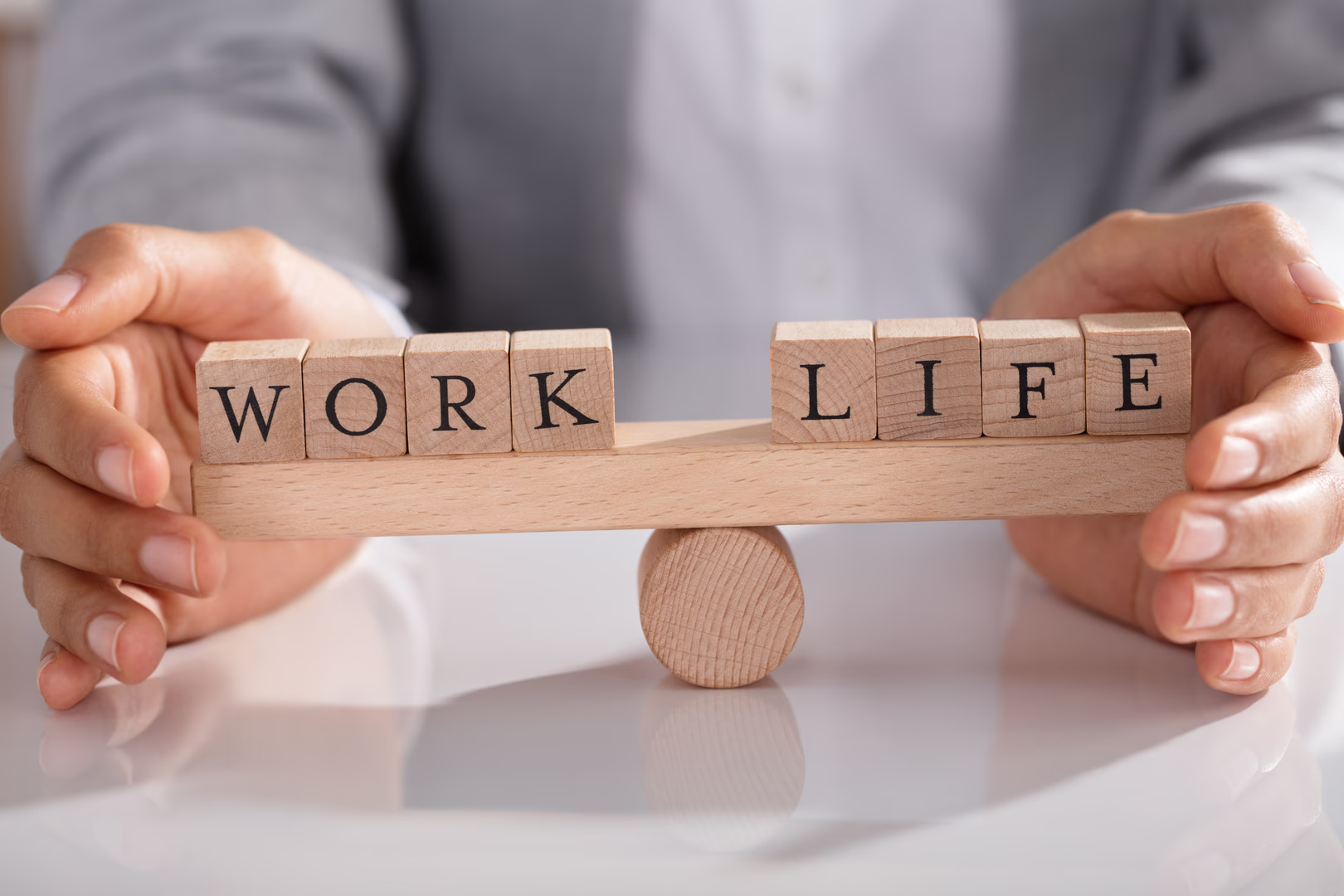
“Work-life balance” sounds almost like a joke when you’re running your own business — there’s always one more email, one more fire to put out. But genuine work life balance for entrepreneurs isn’t about working less ambitiously; it’s about building sustainable habits so you don’t burn out before your business even gets the chance to succeed. Here’s what actually helps, based on what I’ve seen work for real founders.
Why Traditional Work-Life Balance Advice Often Fails Founders
Quick answer: Generic work life balance for entrepreneurs advice often assumes fixed working hours and a clear separation between work and personal life — but running a business rarely allows that structure, especially in the early years, so founders need approaches tailored to unpredictable schedules.
Telling a founder to “just leave work at 6pm” ignores the reality that the business genuinely needs attention at unpredictable times, especially early on.
Setting Boundaries That Actually Work for You
Rather than rigid time blocks that inevitably get broken, focus on boundaries that flex with reality but still protect what matters.
- Define specific non-negotiable personal time (family dinners, a weekly workout, whatever matters most to you)
- Communicate these boundaries clearly to your team and clients
- Accept that some weeks will require more flexibility than others — that’s normal, not failure
- Protect at least one full day per week that’s genuinely disconnected from work
I’ve noticed founders who set completely rigid schedules often abandon them entirely within weeks because reality doesn’t cooperate. Flexible boundaries actually stick better.
Delegating to Protect Your Energy, Not Just Your Time
This connects directly to balance — holding onto every task yourself guarantees burnout regardless of how well you manage your calendar.
- Identify tasks that drain you disproportionately relative to their actual business importance
- Delegate or outsource those specific tasks first, even before delegating based on time savings alone
- Build systems and processes so delegation doesn’t require constant hand-holding
- Trust your team enough to actually step back once you’ve delegated something
Managing the Mental Load, Not Just the Physical Hours
Entrepreneurship’s exhaustion often isn’t about hours worked — it’s about carrying constant mental weight, even during supposed “off” time.
Picture a founder physically at their child’s birthday party but mentally replaying an unresolved client issue the entire afternoon — that’s the real balance problem, and it requires different solutions than simply working fewer hours.
- Build specific “closing” rituals at the end of your workday (writing tomorrow’s priorities, for example) to signal your brain it’s genuinely time to shift focus
- Practice being fully present during personal time, even if imperfectly at first
- Address recurring business anxieties directly rather than carrying them silently into personal time
Building Physical Health Into Your Routine, Not Around It
Health often becomes the first casualty of entrepreneurial hustle, and ironically, that undermines the very energy your business needs from you.
- Schedule physical activity like any other important business meeting, non-negotiable
- Prioritize sleep, even during intense growth periods — decision-making genuinely suffers without it
- Don’t wait for “less busy” times to prioritize health; those times rarely arrive naturally
Finding a Support System That Understands
Quick answer: Building work life balance for entrepreneurs becomes significantly easier with a genuine support network — other founders who understand the unique pressure, family who respect your boundaries, and mentors who’ve navigated similar challenges themselves.
Isolation makes everything feel heavier. Regular conversations with peers facing similar pressures normalize the struggle and often surface practical solutions you hadn’t considered.
Redefining What “Balance” Actually Means for You
Balance doesn’t mean equal hours split perfectly between work and personal life every single day — that’s an unrealistic standard for most founders, especially early on.
Instead, think of balance over longer periods — weeks or months — rather than demanding perfect daily equilibrium. [link to related guide on overcoming fear of failure as an entrepreneur here]
FAQ
Q1. Is true work-life balance realistic for entrepreneurs? Perfect daily balance is rare, but sustainable balance over weeks and months, with intentional boundaries, is genuinely achievable for most founders.
Q2. How many hours should entrepreneurs work per week? There’s no universal number — what matters more is whether your schedule is sustainable long-term without leading to burnout or damaged personal relationships.
Q3. How can entrepreneurs manage guilt about taking personal time? Recognizing that sustainable rest actually improves business decision-making and creativity long-term helps reframe personal time as productive, not indulgent.
Q4. Does delegation really help with work-life balance? Yes, significantly — holding onto every task yourself is one of the most common causes of entrepreneurial burnout and imbalance.
Q5. What’s the biggest mistake entrepreneurs make regarding work-life balance? Waiting for a “less busy” period to prioritize personal time and health, which often never genuinely arrives without deliberate effort to create it.
Q6. Can work-life balance improve as a business matures? Often yes, as systems, delegation, and experience reduce the constant firefighting typical of early-stage businesses, though it requires intentional effort to achieve.
Conclusion
Genuine work life balance for entrepreneurs isn’t about perfectly equal hours — it’s about sustainable boundaries, delegation, and honest attention to your own wellbeing alongside your business’s growth. Pick one boundary from this article to actually protect starting this week, even imperfectly.
Suggested Alt Text for Images:
- “Entrepreneur balancing work and family time”
- “Founder taking break for physical health and wellness”
- “Business owner setting boundaries for personal time”